How to Remove Wine Stains from Couch Fabric | Expert Stain Removal Guide
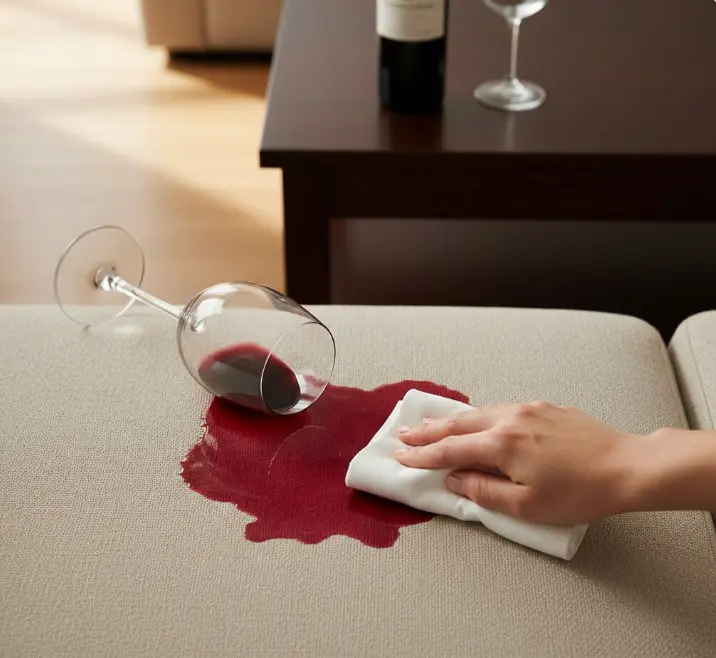
A glass of red wine tips over on your couch, and that sinking feeling hits instantly. Red wine stains are among the most dreaded household accidents for a reason: they spread fast, bond deeply with fabric fibers, and become dramatically harder to remove with each passing minute. But here is the good news — with the right approach and quick action, most wine stains can be removed or significantly reduced, even from light-colored upholstery.
Whether you are dealing with a fresh spill from last night's dinner party or a dried stain you just discovered behind a throw pillow, this comprehensive guide covers everything you need to know about removing wine stains from couch fabric. We will walk you through the science behind why wine stains are so stubborn, immediate emergency steps, proven DIY methods for different fabric types, common mistakes to avoid, and when it is time to call in professionals for professional upholstery cleaning.
Why Wine Stains Are So Difficult to Remove
Understanding the chemistry behind red wine stains helps explain why they are notoriously stubborn and why certain removal methods work better than others. Red wine is not just a simple colored liquid — it is a complex chemical cocktail that attacks fabric on multiple levels.
Tannins
Tannins are naturally occurring polyphenolic compounds found in grape skins, seeds, and stems. These molecules are the same compounds used in leather tanning — literally designed by nature to bind permanently to organic fibers. When red wine contacts your couch fabric, tannins immediately begin bonding with the textile fibers through hydrogen bonds and hydrophobic interactions.
Why this matters: Tannins act like a natural dye, locking color into the fabric at a molecular level. The longer they sit, the stronger the bond becomes.
Anthocyanins
Anthocyanins are the pigment molecules responsible for the deep red, purple, and blue colors in red wine. These water-soluble pigments are extremely potent colorants — a single drop of concentrated anthocyanin can visibly tint a large volume of water. They penetrate deep into fabric fibers and can change color depending on pH levels, which is why wine stains sometimes shift from red to blue or purple as they dry.
Why this matters: Anthocyanins are highly concentrated pigments that can stain even at the microscopic level within fiber structures.
Chromogens
Chromogens are large organic molecules that produce color. Red wine contains several types of chromogens that are chemically similar to the compounds used in commercial fabric dyes. When exposed to heat or oxidation (contact with air), chromogens undergo chemical changes that make them even more intensely colored and significantly harder to break down. This is why a dried wine stain often appears darker than the original spill.
Why this matters: Oxidation transforms chromogens into more stable, deeply colored compounds, making old stains exponentially harder to remove than fresh ones.
Emergency First Steps: What to Do in the First 30 Seconds
Speed is your single greatest advantage when dealing with a wine spill. Before the tannins have time to fully bond with your fabric fibers, follow these steps immediately and in order:
Do NOT Panic — But Act Fast
Take a breath, but move quickly. Grab the nearest clean cloth, paper towels, or even a napkin. Every second counts before the wine penetrates deeper into the fabric fibers.
Blot, Never Rub
Press your cloth firmly onto the stain and lift straight up. Repeat with a clean section of the cloth each time. Never rub or scrub — this pushes wine deeper into the fibers and spreads the stain outward. Work from the outside edge of the spill toward the center to prevent spreading.
Remove Excess Liquid
If the spill is large, carefully lift any pooled wine by pressing layers of paper towels onto the surface. For cushions with removable covers, unzip and place absorbent towels between the cover and the cushion insert to catch wine that has soaked through.
Apply Salt Generously
Pour a thick layer of table salt directly onto the wet stain. Salt draws moisture out of the fabric through osmosis and absorbs the wine before it can set. Leave the salt for at least 5 minutes — you will see it turn pink or red as it absorbs the wine. Then brush or vacuum it away.
Apply Cold Water (Not Hot)
Dampen a clean cloth with cold water and continue blotting. Cold water helps dilute the remaining wine without setting the stain. Hot water will cause the proteins in the wine to bind with the fabric, making the stain permanent. Alternate between blotting with the cold damp cloth and a dry cloth.
Check Your Fabric Care Tag
Before applying any cleaning solution, find the care tag on your couch (usually under a cushion or on the underside of the frame). Look for the cleaning code: W = water-based cleaners safe, S = solvent-based cleaners only, SW = either type safe, X = professional cleaning only. This determines which DIY method you can safely use next.
Choose Your Cleaning Method
Based on your fabric type and care code, proceed to the appropriate DIY method below. If your fabric is coded X or S, skip DIY entirely and call a professional immediately at (425) 287-3619.
DIY Wine Stain Removal Methods by Fabric Type
Not all couch fabrics respond the same way to cleaning solutions. Using the wrong method on the wrong fabric can cause discoloration, water rings, or permanent damage. Always test any cleaning solution on a hidden area of the fabric first (such as the back or underside of a cushion) and wait 10 minutes to check for adverse reactions before treating the stain.
| Fabric Type | Care Code | Recommended Method | Solution Recipe | Difficulty |
|---|---|---|---|---|
| Cotton / Linen | W or SW | Club soda + dish soap method. These natural fibers absorb wine quickly but also respond well to water-based cleaning. | 1 tbsp dish soap + 1 tbsp white vinegar + 2 cups cold water | Easy |
| Microfiber | W or S (check tag) | Rubbing alcohol method for S-coded; dish soap solution for W-coded. Microfiber's tight weave can trap wine, but stains tend to stay near the surface. | W: Club soda + blotting. S: 70% isopropyl alcohol applied with white cloth | Easy |
| Polyester / Nylon | W or SW | Hydrogen peroxide method (for light fabrics) or vinegar solution (for dark fabrics). Synthetic fibers resist absorption, giving you more time. | Light: 1 part 3% hydrogen peroxide + 1 part dish soap. Dark: 2 cups warm water + 1 tbsp white vinegar | Moderate |
| Velvet | S or X | Extreme caution required. Blot only with a dry cloth, apply salt, and call a professional. Water can permanently damage velvet's pile and sheen. | Salt absorption only — do NOT apply liquid solutions. Professional treatment recommended. | Difficult |
| Performance Fabric (Sunbrella, Crypton) | W | Mild soap and water. Performance fabrics have built-in stain resistance, so wine often sits on the surface. Act quickly and the stain may lift completely with just blotting. | 1/4 cup mild liquid soap + 1 gallon lukewarm water. Sponge on, rinse, air dry. | Easy |
Detailed Method: Club Soda + Dish Soap (Cotton, Linen, Most W-Code Fabrics)
- After completing the emergency blotting steps, pour club soda directly onto the stain. The carbonation helps lift the wine pigment from the fibers to the surface.
- Blot the club soda with a clean white cloth. You should see wine color transferring to your cloth.
- Mix 1 tablespoon of clear dish soap (avoid colored soaps) with 1 tablespoon of white vinegar and 2 cups of cold water.
- Using a clean sponge or cloth, apply the solution to the stain, working from the outside edge inward.
- Let the solution sit for 5–10 minutes, then blot with a dry cloth.
- Rinse the area by blotting with a cloth dampened with plain cold water.
- Repeat steps 4–6 until no more wine color transfers to your cloth.
- Place a thick layer of paper towels over the area and weigh them down with a heavy book. Leave overnight to absorb remaining moisture and prevent water rings.
Detailed Method: Hydrogen Peroxide + Dish Soap (Light-Colored Polyester/Blends)
- Mix equal parts 3% hydrogen peroxide and clear liquid dish soap in a small bowl.
- Apply the mixture directly onto the wine stain with a clean cloth or sponge.
- Gently work the solution into the stain using a dabbing motion (never rubbing).
- Let it sit for 20–30 minutes. You may see the stain begin to lighten and bubble slightly — this is normal.
- Blot with a cold water-dampened cloth to remove the cleaning solution.
- Repeat if necessary. Stubborn stains may require 2–3 applications.
- Once the stain is gone, blot the area thoroughly with cold water to remove all soap residue, then air dry completely.
Detailed Method: Rubbing Alcohol (S-Code Microfiber)
- Ensure good ventilation in the room. Open windows or turn on a fan.
- Pour a small amount of 70% isopropyl rubbing alcohol onto a clean white cloth (never pour directly onto the fabric).
- Blot the wine stain gently with the alcohol-dampened cloth. The alcohol dissolves the wine pigments without introducing water, which can leave marks on S-code fabrics.
- As wine transfers to your cloth, rotate to a clean section and reapply alcohol.
- Once the stain is removed, use a soft-bristled brush (like a clean toothbrush) to gently fluff the microfiber nap back to its original texture.
- Allow the area to air dry completely.
Common Mistakes vs. Correct Actions
When panic sets in after a wine spill, people often make mistakes that set the stain permanently. Here is a clear side-by-side comparison of what to avoid and what to do instead:
What NOT to Do
-
Rub or scrub the stain
Rubbing pushes wine deeper into fabric fibers and spreads the stain outward, making it larger and harder to remove.
-
Use hot water
Heat causes the proteins and tannins in wine to bind with fabric fibers permanently, essentially cooking the stain into the material.
-
Apply bleach to colored fabrics
While bleach can remove wine color, it will also strip the dye from your upholstery, leaving a bleached spot that is worse than the wine stain.
-
Wait and deal with it later
Every minute the wine sits, oxidation makes the stain more permanent. A stain treated within 2 minutes has a 90% removal rate; after 24 hours, that drops to around 50%.
-
Pour white wine on red wine
This popular myth does not work. White wine simply adds more liquid and sugar to the stain, potentially attracting insects and causing stickiness.
-
Use colored cloths or towels for blotting
Dye from colored cloths can transfer to your wet upholstery, creating a second stain problem on top of the wine.
-
Over-saturate the fabric with cleaning solution
Using too much liquid can soak through to the cushion padding, creating mold and mildew problems. It can also cause water rings on water-sensitive fabrics.
What TO Do
-
Blot gently with a lifting motion
Press down and lift straight up, rotating to a clean area of your cloth each time. This draws wine out of the fibers rather than pushing it in.
-
Use cold water only
Cold water dilutes the wine and helps flush pigment from the fibers without triggering the heat-set reaction that locks stains in permanently.
-
Use hydrogen peroxide on light fabrics (tested first)
3% hydrogen peroxide is a gentle oxidizer that breaks down wine pigments without the harshness of bleach. Always test on a hidden spot first.
-
Treat the stain within the first 2 minutes
Immediate action is the single biggest factor in successful wine stain removal. Drop everything else and address the spill right away.
-
Apply salt or baking soda to absorb
Granular absorbents draw moisture and pigment out of the fabric through osmosis. Cover the entire stain generously and leave for several minutes.
-
Use only white or unbleached cloths
White microfiber cloths, paper towels, or unbleached cotton rags are safe for blotting and will not transfer any secondary dyes to your fabric.
-
Apply solutions sparingly and blot thoroughly
Use minimal amounts of cleaning solution. Apply to your cloth rather than the fabric when possible, and always follow up with thorough blotting to remove excess moisture.
When to Call a Professional
DIY methods can be effective for many wine stain situations, but there are scenarios where attempting to clean the stain yourself can cause more harm than good. Knowing when to step back and call a professional can save your furniture and your money. Our stain and odor removal services team handles wine stain emergencies throughout the Seattle metro area.
Old or Dried Stains
If the wine stain has been sitting for more than 24 hours, it has likely oxidized and bonded with the fabric. Home methods rarely succeed on fully set stains, but professional-grade enzymes and extraction equipment can still make a significant difference.
Delicate or Expensive Fabrics
Silk, velvet, antique upholstery, and designer fabrics require specialized knowledge and solutions. A wrong step can cause permanent water marks, color loss, or fiber damage that costs far more to repair than professional cleaning.
Large Spills
If an entire glass (or bottle) was spilled and wine has soaked through cushions to the frame or padding, surface cleaning is not enough. Professional extraction equipment can remove wine from deep within cushion cores and prevent mold growth.
Failed DIY Attempts
If you have already tried one or more home methods without success, additional attempts increase the risk of fabric damage. Residues from DIY products can also interfere with professional treatments, so call sooner rather than later.
S-Code or X-Code Fabrics
Fabrics with an "S" (solvent only) or "X" (professional only) cleaning code should never be treated with water-based DIY solutions. These require specialized solvents and professional equipment to avoid permanent water staining and fiber damage.
Multiple or Recurring Stains
If your couch has accumulated multiple wine stains or other marks over time, a comprehensive professional sofa cleaning addresses all issues at once and restores the fabric uniformly. Learn more about how often to clean your couch professionally.
Our Professional Wine Stain Removal Process
When you call The Oven & Carpet Cleaning Company for wine stain removal, our certified technicians follow a systematic, six-step process developed through years of experience treating wine stains across every fabric type. Here is exactly what happens when we arrive at your home:
Step 1: Fabric Assessment
We identify your exact fabric type, construction, and care code. We test colorfastness and evaluate the stain's age, size, and penetration depth. This determines which professional-grade products and techniques are safe and most effective for your specific couch.
Step 2: Pre-Treatment Application
We apply a specialized wine stain pre-treatment solution that targets tannins and anthocyanins at the molecular level. This enzyme-based formula begins breaking the chemical bonds between wine pigments and fabric fibers without harming the textile.
Step 3: Dwell Time
The pre-treatment solution is given controlled dwell time to penetrate and dissolve the stain thoroughly. During this period, the enzymes actively break down tannins while surfactants lift the pigment away from the fiber structure.
Step 4: Hot Water Extraction
Using professional extraction equipment, we flush the treated area with controlled-temperature water and simultaneously vacuum it out at high pressure. This removes the dissolved wine pigment, cleaning solution residue, and embedded dirt from deep within the fibers.
Step 5: Inspection & Secondary Treatment
We inspect the results under bright light and UV to detect any remaining trace of the stain. If any residual pigment remains, we apply a secondary oxidizing treatment specifically calibrated for the remaining discoloration, then extract again.
Step 6: Protection & Drying
Once the stain is fully removed, we apply a professional fabric protectant that creates an invisible barrier against future spills. We then set up air movers to speed drying and prevent any moisture-related issues. Your couch is typically ready to use within 2–4 hours.
Prevention: Protecting Your Couch from Future Wine Stains
The best wine stain is the one that never happens — or the one that is easy to clean because you prepared ahead. Consistent furniture care is key — read our full guide on maintaining upholstery between professional cleanings for a complete routine. Here are practical prevention strategies that do not require you to stop enjoying wine on your couch:
Fabric Protectant
Have your couch professionally treated with a fabric protectant like Scotchgard or a professional-grade equivalent. This creates a hydrophobic barrier that causes liquids to bead on the surface instead of absorbing, giving you crucial extra time to blot up spills.
Reapply: Every 12–18 months or after professional cleaning.
Stemless Glasses
Switch to stemless wine glasses when relaxing on the couch. Traditional stemmed glasses are top-heavy and easy to knock over, especially on soft surfaces like couch cushions or armrests. Stemless glasses have a lower center of gravity and are far less likely to tip.
Bonus: Use glasses with silicone grip bases for added stability.
Stain Emergency Kit
Keep a compact stain kit in or near your living room. Include: white microfiber cloths, table salt, club soda, a small bottle of enzyme-based stain remover, and paper towels. Having everything within reach eliminates the time lost searching for supplies after a spill.
Storage: A small basket or decorative box near the couch works perfectly.
Smart Fabric Choices
If you are buying a new couch and enjoy wine regularly, consider performance fabrics like Crypton, Sunbrella, or Revolution. These are engineered with built-in stain resistance and can handle wine spills with minimal effort. Dark-colored fabrics and patterns also help camouflage minor staining.
Tip: Removable, washable slipcovers are another practical option.
Use Coasters and Trays
Place a stable tray or side table near your seating area for wine glasses. Avoid placing glasses on soft cushions, armrests, or uneven surfaces. A flat, stable surface reduces the risk of accidental tips and spills dramatically.
Regular Professional Cleaning
Schedule professional upholstery cleaning every 12–18 months. Regular cleaning removes accumulated grime that makes fabrics more susceptible to permanent staining. It also gives your technician the opportunity to reapply fabric protectant. Read our guide on how often to clean your couch professionally for more details.
What Our Customers Say About Our Wine Stain Removal
We have helped hundreds of Seattle-area homeowners save their couches from wine stain disasters. Here are some recent experiences:
"We had a dinner party and someone knocked over an entire glass of Cabernet on our cream-colored sectional. I panicked and tried scrubbing with soap and water, which only made it worse. Called The Oven & Carpet Cleaning Company the next morning and they came out the same day. Their technician worked on the stain for about 30 minutes and it was completely gone. You honestly cannot tell where the spill was. Absolutely worth every penny."
"I discovered a red wine stain on our gray microfiber couch that had been hidden under a throw blanket for what must have been weeks. I assumed it was permanent at that point. The team at Oven & Carpet was upfront that older stains are harder, but they gave it their best shot. The stain went from a dark purple blotch to barely noticeable — maybe a 90% improvement. They also applied protectant to help prevent future issues. Very professional and honest about what to expect."
"My cat knocked my Pinot Noir off the coffee table and it splashed across two cushions of our new linen sofa. I called at 8 PM in a full panic. They could not come out that night, but walked me through the emergency blotting and salt steps over the phone, which was incredibly helpful. The technician came the next morning and got both cushions looking perfect. They even showed me how to treat a fresh spill myself for next time. Above and beyond service."
"We run a small bed and breakfast in Capitol Hill and wine stains on furniture are an ongoing battle. The Oven & Carpet Cleaning Company now handles all our upholstery maintenance on a quarterly schedule. They have successfully removed Merlot stains from velvet chairs, Malbec from our white cotton sofa, and Shiraz from dining chair seats. They are our go-to for everything fabric-related. Reliable, skilled, and always on time."
Frequently Asked Questions About Wine Stain Removal
Yes, in many cases dried wine stains can still be significantly reduced or fully removed, though the success rate decreases the longer the stain has set. Fresh stains (treated within a few hours) have a near-perfect removal rate. Stains that are days old can often be removed with professional enzyme treatments and extraction. Stains that are weeks or months old are the most challenging — professional cleaning can typically achieve 70–90% improvement, though complete removal is not always guaranteed. The key factor is not just age, but whether the stain was heat-set (exposed to hot water or dryer heat) or treated with products that locked it in.
Club soda can be helpful as a first-response treatment, but it is not a miracle cure. The carbonation (dissolved carbon dioxide) creates tiny bubbles that help lift wine pigment from fabric fibers to the surface, making it easier to blot away. The sodium content also helps prevent the stain from setting. However, club soda alone is unlikely to fully remove a red wine stain — it works best as the first step followed by a proper cleaning solution. Plain cold water is nearly as effective for the initial dilution and blotting phase.
Standard 3% hydrogen peroxide (the kind sold at pharmacies) is generally safe for white and very light-colored fabrics, but it carries real risk for colored upholstery. Hydrogen peroxide is an oxidizing agent — while it breaks down wine pigments effectively, it can also lighten or bleach fabric dyes. Always test on a completely hidden area of the fabric and wait at least 10 minutes before using it on the stain. Never use concentrations higher than 3% on upholstery. If your fabric is medium or dark-colored, skip hydrogen peroxide entirely and use a vinegar-based solution or call a professional instead.
The cost of professional wine stain removal varies based on the stain size, fabric type, stain age, and whether additional services like full-couch cleaning or fabric protection are included. For a single wine stain spot treatment, most homeowners in the Seattle area can expect to pay between $75 and $150. If you combine stain removal with a full couch cleaning, it is often more cost-effective. We provide free phone estimates and can give you an exact quote based on photos of the stain. Call us at (425) 287-3619 or email [email protected] for a personalized estimate.
When done correctly by a trained professional, wine stain removal should not damage or discolor your fabric. Our technicians always perform colorfastness testing before applying any product, and we use fabric-specific solutions that are pH-balanced for each material type. The risk of damage increases significantly with DIY methods, especially if harsh chemicals like bleach, undiluted vinegar, or high-concentration hydrogen peroxide are used. If you have attempted DIY cleaning and notice discoloration, stop immediately and contact us — continuing to work on the stain yourself may make the problem worse.
Yes, but the process is entirely different from fabric upholstery cleaning. Leather and suede require specialized products and techniques to avoid drying, cracking, or permanent discoloration. For finished (protected) leather, wine often sits on the surface and can be wiped away easily if caught quickly. Unfinished leather and suede are more porous and absorb wine rapidly, requiring professional treatment. We offer specialized sofa cleaning in Seattle for both fabric and leather upholstery. Never use water-based cleaning solutions on suede — call a professional instead.
Related Cleaning Guides
Wine stains are just one of many challenges your upholstered furniture can face. Explore our other expert guides for keeping your furniture looking its best:
Sharpie Stain Removal
Permanent marker on your furniture? Our guide covers proven methods for removing sharpie stains from fabric without damaging the upholstery.
Pet Stain & Odor Removal
Pets and furniture are a challenging combination. Learn about our professional stain and odor removal services for pet-related accidents.
Dust Mite Prevention
Wine spills are not the only hidden threat in your couch. Discover what is living in your cushions with our guide to dust mites in upholstered furniture.
Wine Stain Emergency? We Offer Same-Day Service
Every minute counts when red wine hits your couch. The Oven & Carpet Cleaning Company provides emergency same-day wine stain removal service throughout Seattle, Bellevue, Kirkland, Redmond, and the greater Eastside. Our certified technicians arrive equipped with professional-grade stain removal solutions and extraction equipment — no stain is too fresh or too old for us to assess.
Same-Day Response
Call before 2 PM for same-day emergency service on fresh wine stains
Phone Guidance
Call us anytime for free emergency advice on immediate steps to take
Free Estimates
Send us a photo of the stain for a no-obligation quote within minutes
Serving Seattle, Bellevue, Kirkland, Redmond, Bothell, Woodinville, Lynnwood, Edmonds, Shoreline, and surrounding areas
 Contact us on WhatsApp