How to Maintain Upholstery Between Professional Cleanings | Expert Furniture Care Guide
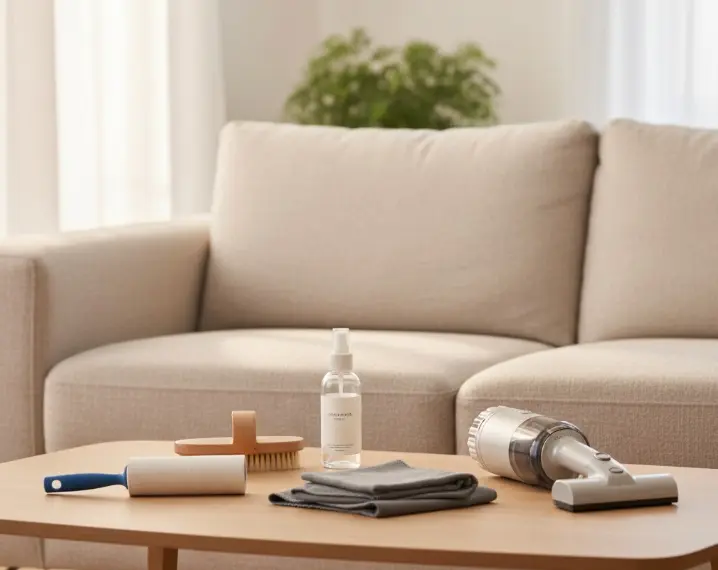
Your sofa is the hardest-working piece of furniture in your home. It endures daily sitting, pet naps, snack spills, and everything in between — yet most homeowners only think about cleaning it when stains become visible or odors become noticeable. The truth is that what you do between professional cleanings determines how long your upholstery lasts, how clean it actually is, and how much you ultimately spend on furniture over your lifetime.
With 15+ years of professional upholstery cleaning experience and more than 12,000 sofas cleaned across the Seattle metropolitan area, The Oven & Carpet Cleaning Company has seen firsthand what separates furniture that lasts 5 years from furniture that looks great after 15. This guide distills our technicians' real-world knowledge into a practical, actionable maintenance plan that any homeowner can follow. Whether you own a luxurious leather sectional, a family-friendly microfiber couch, or a delicate linen loveseat, these upholstery maintenance tips will keep your furniture looking, feeling, and smelling fresh between professional upholstery cleaning appointments.
Your Weekly Upholstery Maintenance Routine
Consistency beats intensity when it comes to furniture care between cleanings. A 15-minute weekly routine prevents the slow buildup of dust, allergens, body oils, and grime that gradually degrades your fabric and cushion fill. Here is the exact weekly checklist our senior technicians recommend to every customer after a professional cleaning:
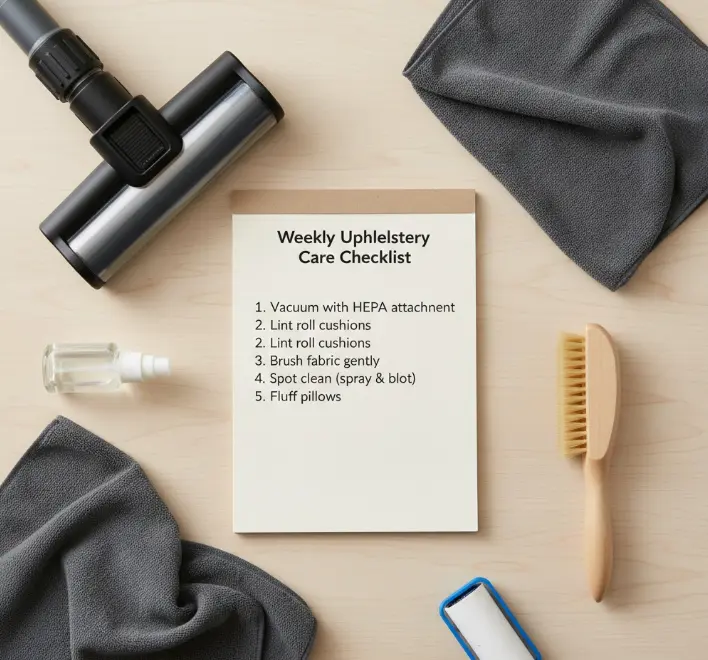
Remove and Fluff All Cushions (2 minutes)
Pull every cushion off the sofa, including back cushions and throw pillows. Give each one a firm shake outdoors or over a hard floor to dislodge crumbs, pet hair, and dust. Flip and rotate seat cushions to distribute wear evenly — this prevents the "one flat spot" problem we see on 80% of sofas that come through our shop. Plump back cushions by punching them gently from all sides to redistribute the fill material.
Vacuum All Surfaces Thoroughly (5–7 minutes)
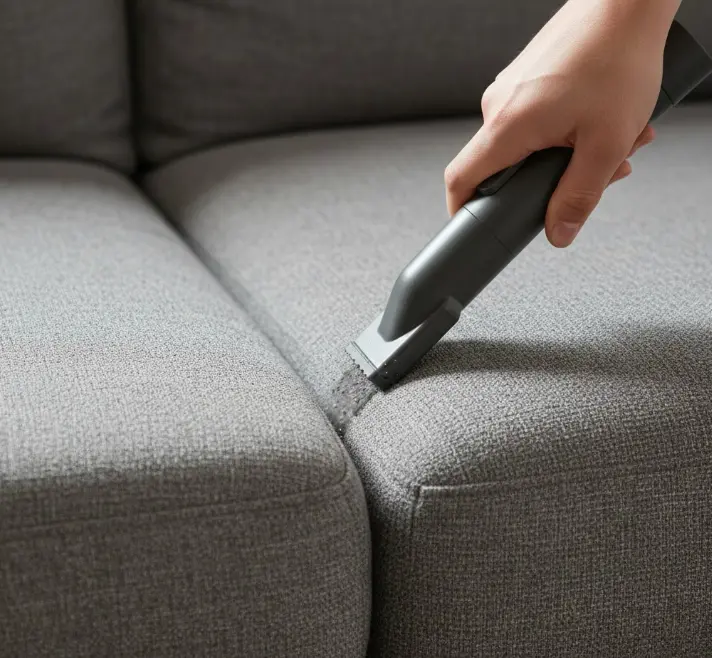
Using the upholstery attachment on your vacuum (the flat one with a fabric strip), vacuum the entire sofa surface: seat areas, back, armrests, sides, and the platform underneath the cushions. Use the crevice tool to get into seams, tufting, and the gaps between the frame and cushions — this is where the majority of debris accumulates. Vacuum in overlapping, slow strokes; rushing reduces suction effectiveness by up to 40%. If your fabric has a nap (like velvet or microfiber), vacuum in the direction of the nap to avoid matting.
Lint Roll or Brush Pet Hair (2 minutes)
If you have pets, follow up vacuuming with a lint roller or a rubber-bristled pet hair brush on fabric surfaces. Vacuums miss fine pet hair that embeds itself in woven textures. A dampened rubber glove dragged across the fabric also works surprisingly well — static electricity pulls embedded hair to the surface. For households with multiple pets, consider keeping a dedicated lint roller in your living room for daily touch-ups.
Wipe Down Hard Surfaces (1–2 minutes)
Use a slightly damp microfiber cloth to wipe wooden or metal legs, armrest frames, and any exposed hard surfaces. Body oils and hand lotions accumulate on armrests and can transfer to fabric, causing permanent darkening over time. For leather portions, use a dedicated leather-safe damp cloth. This step takes minimal time but prevents the gradual grimy buildup we see on virtually every couch brought in for professional cleaning.
Inspect for New Stains or Damage (1 minute)
Do a quick visual inspection of the entire piece. Fresh stains are dramatically easier to remove than set ones — catching a coffee drip or food smudge within a week versus a month can be the difference between a simple wipe and a professional service call. Check for loose seams, pilling, or fabric wear that might need attention. Addressing small issues early prevents expensive repairs later. Refer to our wine stain removal guide or pet stain removal guide for specific stain types.
The Right Way to Vacuum Upholstery
Vacuuming is the single most important thing you can do to maintain your furniture, yet most people do it incorrectly or not often enough. After cleaning 5,000+ sofas in Seattle homes, our technicians consistently see that improper vacuuming is the number one reason upholstery deteriorates prematurely. Here is how to do it right:
Correct Technique
- Use the upholstery attachment — it has a wide, flat head with soft bristles or a fabric strip that prevents fiber damage while maximizing suction contact.
- Slow, overlapping strokes — move the attachment slowly across the fabric. Each stroke should overlap the previous one by about 50%. Slow passes give the vacuum time to pull embedded particles from the fibers.
- Vacuum in one direction for napped fabrics (velvet, microfiber, chenille) to maintain a uniform appearance. Switching directions can create visible brush marks.
- Use the crevice tool for seams, piping, tufting buttons, and the gap between the seat deck and the arms/back. These crevices trap an astonishing amount of debris.
- Vacuum underneath — lift the sofa skirt (if applicable) and vacuum the underside of the frame where dust accumulates and dust mites thrive.
- Adjust suction — if your vacuum has suction control, use a medium setting for delicate fabrics and full power for durable synthetics. Too much suction on silk or velvet can damage the pile.
Common Vacuuming Mistakes
- Using the motorized beater bar — the spinning brush designed for carpets is too aggressive for upholstery fabric. It can pull threads, create pilling, and damage delicate weaves. Always switch to the flat upholstery attachment.
- Rushing through the process — quick, fast passes pick up only surface debris. The particles embedded in the fabric (the ones that actually cause damage) require slow, deliberate passes to dislodge.
- Skipping the crevices — the seams and deck area (under the seat cushions) often harbor more dirt, crumbs, and allergens than the visible surfaces. These hidden areas need attention every time.
- Vacuuming only when visible dirt appears — by the time you can see dirt on upholstery, there is significantly more embedded in the fabric. Weekly vacuuming prevents invisible buildup from reaching that visible threshold.
- Using a vacuum with a full bag or canister — suction decreases dramatically as the bag fills. Empty your canister or replace the bag when it is two-thirds full for optimal performance on upholstery.
Case Study: The Impact of Weekly Vacuuming
Customer A — No Routine Vacuuming
The Hendersons in Kirkland, WA had their 3-year-old microfiber sectional professionally cleaned for the first time. Without any routine vacuuming between cleanings, our extraction process removed a shocking amount of deeply embedded grit, skin cells, and allergens. The fabric had lost its original softness, and several areas showed premature wear from abrasive particles grinding against the fibers with every use. Total cleaning time: 3.5 hours. Several areas of permanent discoloration could not be reversed.
Customer B — Weekly Vacuuming Routine
The Patels in Bellevue had the same brand and fabric sofa, also 3 years old, but followed a weekly vacuuming routine. When we cleaned their sectional, the extraction water was notably cleaner, the fabric had retained its original texture and color uniformity, and there were no areas of premature wear. Total cleaning time: 2 hours. The sofa looked nearly new after professional treatment, and our technician estimated it had years of life left in it.
Monthly Deep Maintenance Tasks
Beyond your weekly routine, certain maintenance tasks should be performed monthly to address deeper cleaning needs and prevent long-term issues. These tasks take 20–30 minutes and complement your weekly efforts to create a comprehensive sofa maintenance guide that protects your investment.
Fabric Freshening
Lightly mist upholstery with a fabric-safe deodorizer or a homemade solution of 1 cup water, 1 tablespoon white vinegar, and 5 drops of essential oil (lavender or tea tree work well). Hold the spray bottle 12 inches from the surface and mist lightly — do not saturate. Allow to air dry completely. This neutralizes odors from body oils, cooking smells, and everyday use without leaving residue.
Frequency: Monthly
Cushion Rotation & Reshaping
Fully rotate all seat cushions — swap left with right, front with back. If cushions are reversible, flip them over. This distributes wear patterns and compression evenly, preventing the "sagging favorite spot" that shortens cushion life. For down or feather-blend cushions, physically reshape them by pushing fill material back toward the center and edges. Stand cushions on end for a few hours to let gravity redistribute the filling.
Frequency: Monthly
Deep Crevice Cleaning
Remove all cushions and thoroughly clean the deck (the platform under the seat cushions). Use your vacuum's crevice tool along every seam and joint. Follow up with a damp microfiber cloth to wipe down the deck fabric. You will likely find crumbs, coins, hair ties, pet hair, and other debris that regular vacuuming misses. This hidden area is a primary breeding ground for dust mites and bacteria.
Frequency: Monthly
Throw & Pillow Washing
Launder all removable throw pillow covers, decorative throws, and blankets that drape over your furniture. These items collect skin oils, sweat, pet dander, and allergens, and transfer them directly to your upholstery. Wash according to care labels (most can handle a gentle machine cycle). Replace them only when fully dry to prevent moisture transfer to your couch fabric.
Frequency: Monthly
Sun Exposure Check
Evaluate whether direct sunlight is hitting your upholstery during any part of the day. UV exposure fades fabric colors and weakens fiber structure over time. If sunlight patterns have shifted seasonally, adjust blinds, curtains, or furniture positioning. Even 30 minutes of daily direct sun over several months can cause noticeable fading on the exposed side compared to the shaded side of the same piece.
Frequency: Monthly
Hardware & Frame Check
Tighten any loose legs, check for wobbly joints, inspect reclining mechanisms, and examine the support webbing or springs under the cushions (if accessible). Loose hardware accelerates wear on upholstery by allowing uneven stress on the fabric. A wobbling frame causes friction points that can thin fabric prematurely. Five minutes of tightening can prevent hundreds of dollars in frame or reupholstering costs.
Frequency: Monthly
Spot Cleaning Emergency Guide by Stain Type
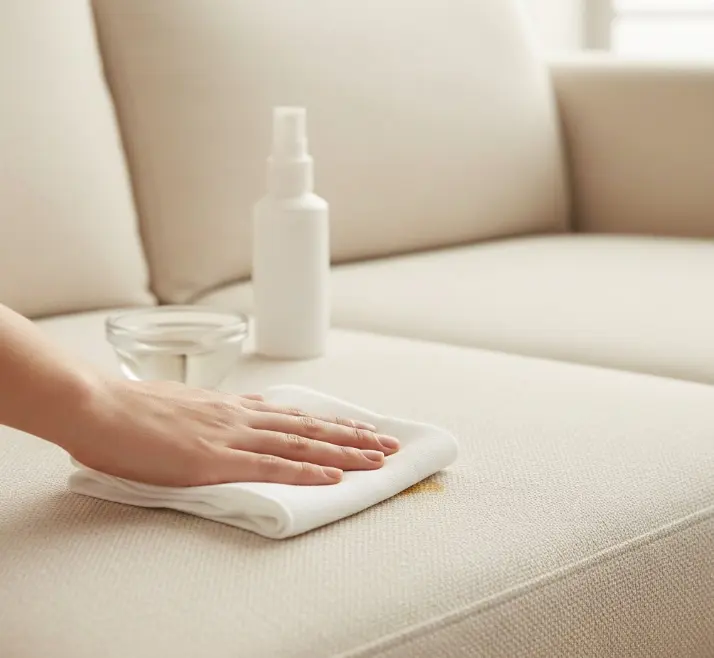
Even with the best maintenance routine, accidents happen. Knowing how to handle common stains immediately — before they set — is essential to keeping your couch clean between professional visits. Always check your furniture's cleaning code tag first (W = water-based cleaners, S = solvent only, WS = either, X = professional only), and test any cleaning solution on a hidden area before applying it to the stain.
| Stain Type | Immediate Action | Cleaning Solution | Safe For | Difficulty |
|---|---|---|---|---|
| Coffee / Tea | Blot immediately with a dry white cloth. Do not add water yet if the spill is still pooled on the surface. | Mix 1 tbsp dish soap + 1 tbsp white vinegar + 2 cups cool water. Apply with cloth, blot, rinse with plain water, blot dry. | W, WS fabrics | Easy |
| Red Wine | Blot immediately, cover with table salt to absorb. Do not use hot water. See our full wine stain removal guide. | Club soda for initial treatment, then 1 tbsp dish soap + 1 tbsp white vinegar + 2 cups cold water. For light fabrics: equal parts 3% hydrogen peroxide and dish soap. | W, WS fabrics | Moderate |
| Food / Grease | Scrape off solid material with a dull knife or spoon. Blot grease with a dry cloth. Apply baking soda to absorb oil for 15 minutes, then vacuum. | For grease: apply cornstarch or baking soda, let sit 20 min, vacuum. Follow with dish soap solution (1 tsp dish soap in 1 cup warm water). Blot, rinse, blot dry. | W, WS fabrics | Easy |
| Ink / Marker | Do not apply water. Blot (do not rub) with a dry cloth. For ballpoint ink, apply rubbing alcohol to a white cloth and dab carefully. | 70% isopropyl alcohol applied to a clean white cloth. Dab the stain gently — do not pour alcohol directly on fabric. Hairspray (alcohol-based) can also work on ballpoint ink. Permanent marker requires professional treatment. | W, S, WS (test first) | Difficult |
| Pet Accidents | Blot urine immediately. For vomit/feces, remove solid matter first with a spoon, then blot liquid. Do not use ammonia-based cleaners — they mimic urine scent and encourage repeat marking. | Enzyme-based pet cleaner (Nature's Miracle, Rocco & Roxie) applied per label. For DIY: 1 cup water + 1/3 cup white vinegar + 1/4 tsp dish soap. Apply, let sit 10 min, blot dry. See our pet stain removal guide. | W, WS fabrics | Moderate |
| Crayon / Wax | Let wax harden completely (use ice cubes in a plastic bag to speed this). Once hard, scrape off as much as possible with a dull knife. | Place a brown paper bag over the remaining wax. Press a warm (not hot) iron over the paper for a few seconds — the wax will transfer to the paper. Repeat with fresh paper until wax is gone. Treat any remaining color with rubbing alcohol on a white cloth. | Most fabrics (test iron heat first) | Moderate |
"The biggest spot cleaning mistake I see homeowners make is over-wetting the fabric. Use as little liquid as possible. You want to dampen the stain, not soak it. Excess moisture pushes the stain deeper, can cause water rings on sensitive fabrics, and creates conditions for mold growth inside the cushion. Apply your cleaning solution to your cloth first, then dab the stain — never pour anything directly onto the upholstery."
— Mike R., Senior Technician (11 years with The Oven & Carpet Cleaning Company, IICRC certified)
Fabric-Specific Care Guide
Different upholstery fabrics have fundamentally different care requirements. Using the wrong product or technique on the wrong fabric is one of the most common ways homeowners accidentally damage their furniture. This upholstery care routine chart gives you fabric-specific guidance based on what we have learned from cleaning thousands of sofas across every material type.
| Fabric | Care Code | Weekly Care | Safe Cleaners | Avoid | Pro Cleaning Interval |
|---|---|---|---|---|---|
| Microfiber | W or S | Vacuum with upholstery attachment. Brush with a soft nylon brush to restore nap. Lint roll for pet hair. | W-code: mild soap & water. S-code: rubbing alcohol only. Distilled water prevents mineral marks. | Beater bar vacuuming, excessive water on S-code, dark-colored cloths for cleaning. | Every 12–18 months |
| Cotton | W or WS | Vacuum weekly. Rotate cushions to prevent uneven fading and wear. Brush off surface lint. | Mild dish soap solution, white vinegar solution, enzyme cleaners for organic stains. | Bleach (causes yellowing), hot water (causes shrinkage), oversaturation (causes water marks). | Every 12 months |
| Linen | S or WS | Vacuum gently on low suction. Avoid sitting in the same spot repeatedly. Smooth wrinkles by hand. | Dry cleaning solvent for S-code. Mild soap for WS-code. Always test first — linen is prone to water spotting. | Excessive moisture, aggressive rubbing (weakens fibers), direct sunlight (accelerates fading). | Every 12 months |
| Leather | Varies | Dust with dry microfiber cloth. Wipe with barely-damp cloth monthly. Condition with leather conditioner every 3–6 months. See our leather care guide. | pH-balanced leather cleaner, leather conditioner. Saddle soap for heavy cleaning. | All-purpose cleaners, baby wipes (contain chemicals that dry leather), vinegar, ammonia, oils that are not leather-specific. | Professional conditioning every 12–18 months |
| Velvet | S or X | Vacuum gently in the direction of the nap using low suction. Use a velvet brush to maintain pile direction. Avoid crushing by repositioning throw pillows. | Dry cleaning solvent for S-code. Steaming can revive crushed pile (hold steamer 6 inches from fabric). Professional cleaning for X-code. | Water (causes permanent water marks), rubbing (crushes and mats the pile), heat, and direct pressure from heavy objects. | Professional cleaning every 12 months |
| Polyester | W or WS | Vacuum weekly. Polyester is durable but can pill with friction — use a fabric shaver monthly to remove pills. | Mild dish soap solution, white vinegar solution, most commercial upholstery cleaners. | High heat (melts fibers), acetone or nail polish remover, and harsh solvents. | Every 18–24 months |
Fabric Protectors: Your Furniture's Best Defense
Applying a quality fabric protector is one of the most cost-effective steps you can take to extend the life and appearance of your upholstery. After every professional cleaning, we offer fabric protection application — and the difference it makes between cleanings is significant.
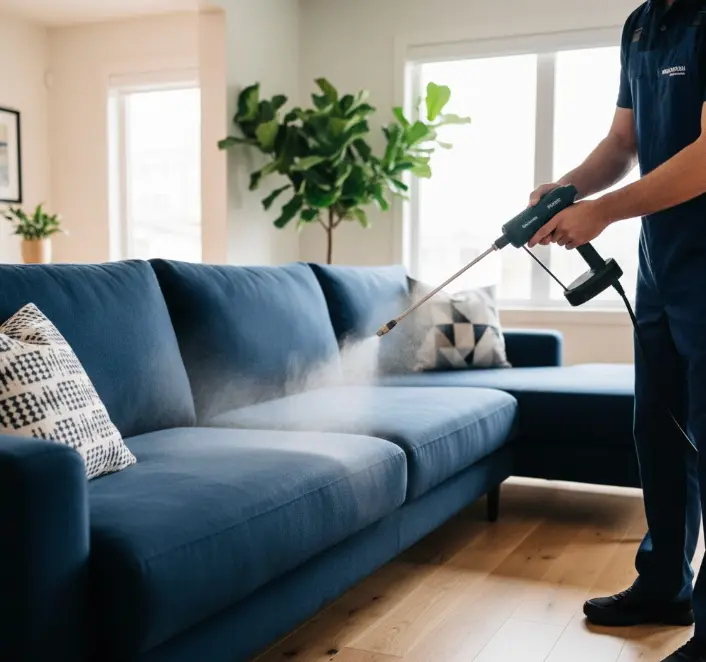
What Fabric Protectors Do
- Create a hydrophobic barrier: Liquid spills bead on the surface instead of immediately absorbing, giving you critical time to blot them up before they penetrate the fibers.
- Repel oil-based stains: Body oils, lotions, food grease, and cosmetics are less likely to bond with protected fibers, making spot cleaning far more effective.
- Reduce soil adhesion: Dirt, dust, and pet dander sit on the surface rather than embedding deeply, making your weekly vacuuming significantly more effective.
- Preserve fabric color: Many protectors include UV inhibitors that slow fading from sun exposure.
- Extend time between professional cleanings: Protected furniture stays cleaner longer, allowing you to extend your professional cleaning interval from 12 months to 18 months in many cases.
What Fabric Protectors Do NOT Do
We believe in honest, transparent advice — even when it does not directly benefit our sales. Here is what fabric protectors cannot do:
- They are not permanent: Protectors wear off with use and need reapplication every 12–18 months, typically after a professional cleaning.
- They do not make fabric stain-proof: They make fabric stain-resistant. If a spill sits long enough, it will eventually penetrate even protected fabric.
- They do not replace cleaning: Protection reduces how quickly your furniture gets dirty, but it still needs regular vacuuming and periodic professional cleaning.
- They are not suitable for all fabrics: Certain fabrics (like some natural silks and unfinished leathers) should not receive chemical protectors. Always consult a professional.
- DIY spray products are weaker: Consumer-grade spray protectors provide significantly less coverage and durability compared to professional-grade application with proper equipment.
"I always tell customers that fabric protector is like sunscreen for your sofa. It does not make you invincible, but it gives you a massive safety net. The families who invest in protection after cleaning consistently have fewer emergency stain calls and their furniture looks dramatically better at the 12-month mark. It is the single best add-on for long-term furniture value."
— Sarah L., Lead Technician (8 years with The Oven & Carpet Cleaning Company, IICRC Upholstery & Fabric Cleaning certified)
Seasonal Upholstery Care Calendar (Seattle & Pacific Northwest)
Seattle's unique climate — with wet, humid winters and dry, sunny summers — creates seasonal challenges for upholstery that differ from other parts of the country. Our technicians have developed season-specific recommendations based on the conditions they see in Pacific Northwest homes year-round.
Spring (March – May)
Allergen Season
- Deep vacuum all upholstery as pollen counts spike. Spring pollen settles on indoor surfaces through open windows and on clothing.
- Schedule professional cleaning — spring is the ideal time. It removes winter's accumulated moisture-related buildup and prepares your furniture for summer entertaining.
- Wash all removable covers and throw pillow cases to remove dust mite populations that thrived in winter humidity.
- Open windows strategically on dry days to air out your living room, but vacuum upholstery afterward to remove pollen that enters.
Summer (June – August)
UV & Activity Season
- Manage sun exposure — Seattle's long summer days mean extended UV exposure through west- and south-facing windows. Use blinds or UV-filtering window film to protect fabric colors.
- Increase vacuuming frequency if windows are open regularly. Summer brings more foot traffic, outdoor debris, and activity around furniture.
- Address perspiration buildup — warm weather means more body oils and sweat transferring to upholstery, especially on armrests and headrest areas. Wipe these zones with a damp cloth weekly.
- Apply fabric protector before summer entertaining season if it has been more than 12 months since the last application.
Fall (September – November)
Preparation Season
- Pre-holiday deep clean — schedule professional cleaning in October or early November before the holiday entertaining season. Your furniture will look and smell its best for Thanksgiving and holiday gatherings.
- Check for moisture issues as Seattle's rainy season begins. Ensure furniture is not positioned against cold exterior walls where condensation can develop.
- Treat leather furniture with conditioner before the heating season starts — forced-air heating dries leather and can cause cracking. See our leather furniture care guide.
- Stock your stain emergency kit — holiday parties mean more spill risks. Have white cloths, salt, club soda, and enzyme cleaner ready.
Winter (December – February)
Moisture & Usage Season
- Monitor indoor humidity — Seattle winters are damp, and indoor humidity above 50% promotes dust mite growth and can cause musty odors in upholstery. Use a dehumidifier or ensure your HVAC system is managing moisture.
- Vacuum more frequently — winter means more indoor time, more couch use, and more accumulated skin cells, food particles, and pet dander.
- Protect from wet outerwear — rain-soaked jackets and bags tossed onto the couch transfer moisture and dirt directly into the fabric. Use a coat rack or designated landing spot for wet items.
- Keep furniture away from heaters — direct heat from radiators and space heaters dries fabric fibers and accelerates fading and wear.
Common Mistakes That Damage Upholstery
Over 15 years of cleaning furniture across the Seattle metro area, our team has seen every type of upholstery damage imaginable — and the majority of it was preventable. Here are the most common mistakes we encounter, along with what you should do instead:
DON'T Do This
-
Use all-purpose household cleaners on upholstery
Products like Windex, 409, or Lysol sprays contain chemicals that can strip fabric dyes, leave sticky residues that attract more dirt, and damage fiber coatings. They are formulated for hard surfaces, not textiles.
-
Over-wet the fabric when spot cleaning
Saturating upholstery pushes stains deeper, can cause water marks on sensitive fabrics, soaks through to cushion padding (promoting mold), and takes days to dry — creating odor problems.
-
Skip vacuuming because the couch "looks clean"
Microscopic grit, skin cells, and allergens are invisible to the naked eye but act like sandpaper between fabric fibers every time someone sits down. This abrasive action is the leading cause of premature fabric wear.
-
Place furniture in direct sunlight
UV radiation fades fabric colors unevenly and weakens fiber structure over time. We regularly see sofas where the side facing a window has faded noticeably while the shaded side retains its original color.
-
Use baby wipes or makeup wipes as quick cleaners
These wipes contain lotions, fragrances, and chemicals (like lanolin and alcohol) that can leave residue on fabric, attract dirt, and in some cases permanently alter fabric texture or color.
-
Ignore manufacturer care tags
The cleaning code on your furniture's care tag exists for a reason. Using water on an "S" code fabric or solvents on a "W" code fabric can cause irreversible damage including shrinkage, water rings, and color bleeding.
-
Let pets sleep in the same spot every day
Concentrated pet oils, dander, and hair break down fabric in localized areas. We regularly see "pet spots" where the fabric is visibly worn, discolored, and matted compared to the rest of the sofa.
DO This Instead
-
Use only fabric-specific cleaners matched to your care code
Invest in a quality upholstery cleaner rated for your specific fabric type. For most W-code fabrics, a simple solution of mild dish soap and water is safer and more effective than any multi-surface spray.
-
Apply cleaning solutions to your cloth, not the fabric
Dampen your cleaning cloth with the solution and then dab the stain. This gives you precise control over how much moisture contacts the fabric and prevents over-wetting and solution pooling.
-
Vacuum weekly regardless of visible soil
Treat vacuuming as preventive maintenance, not reactive cleaning. Just like brushing your teeth, the goal is to prevent buildup before it becomes a visible problem. Twice weekly is ideal for pet households.
-
Use window treatments to filter UV light
Blinds, curtains, or UV-filtering window film protect your furniture investment. Close coverings during peak sun hours (typically 10 AM – 4 PM) on sun-facing windows. Some furniture protectors also include UV inhibitors.
-
Keep dedicated white microfiber cloths for upholstery
White cloths ensure no dye transfer, and microfiber's fine structure is gentle on fabric while being highly effective at lifting dirt and absorbing spills. Keep 4–6 on hand specifically for furniture care.
-
Read and follow your care tag for every cleaning decision
Take a photo of your furniture's care tag and save it in your phone. When a stain happens, check the photo before reaching for any cleaning product. This 10-second step prevents costly mistakes.
-
Use washable pet blankets over your pet's favorite spots
A machine-washable blanket or pet throw over your pet's preferred lounging area protects the underlying upholstery while still letting your pet enjoy the couch. Wash the blanket weekly.
Products We Recommend (and Products to Avoid)
After testing hundreds of cleaning products over 15+ years of professional work, our technicians have clear favorites and clear products to avoid. We have no financial relationship with any of these brands — these recommendations are based purely on performance, safety, and value. We believe giving you honest advice builds trust, even when that advice does not directly benefit our business.
Recommended Products
Despite the name, this works excellently on most W-code upholstery fabrics. Non-toxic, no residue, no rinsing required, and effective on a wide range of stains. Our technicians' top pick for homeowner use.
The best enzyme-based cleaner for pet stains and odors. Genuinely breaks down organic matter at the molecular level rather than just masking odors. Safe for most fabrics when used as directed.
A solid consumer-grade fabric protector that provides genuine water and stain resistance. Not as durable as professional application, but effective for touch-ups between professional treatments. Includes UV protection.
The best consumer leather conditioner we have encountered. Absorbs deeply, does not leave a greasy residue, and genuinely extends leather life. Apply every 3–6 months for optimal results.
No brand loyalty needed here — any quality white microfiber cloth works. Buy a 12-pack, designate them for upholstery only, and replace them when they start to feel rough. The most useful tool in your furniture care kit.
Products to Avoid
Even diluted bleach strips dye from upholstery fabrics, weakens fibers, and can cause yellowing on white fabrics over time. There is no safe concentration for colored upholstery.
Most aerosol upholstery foam cleaners leave a sticky chemical residue that actually attracts more dirt over time, making your furniture look worse in the long run. They also provide only surface-level cleaning.
These are formulated for hard, non-porous surfaces and contain solvents and surfactants that can damage fabric dyes, coatings, and fibers. They are among the most common causes of avoidable upholstery damage we see.
Ammonia can permanently discolor many fabric types, and the smell can actually encourage pets to urinate on treated areas (ammonia mimics the scent compounds in urine).
While baking soda is great for absorbing odors and moisture briefly, leaving thick pastes on fabric overnight can dry out fibers and leave a chalky residue that is extremely difficult to fully vacuum out. Use for 15–20 minutes maximum, then vacuum thoroughly.
When DIY Is Not Enough: Signs You Need Professional Cleaning
Even the most diligent home maintenance routine cannot replicate the deep cleaning that professional equipment and expertise provide. Here are clear signs that it is time to call in a professional — and waiting too long can mean the difference between a restored sofa and a replacement purchase. Learn more about how often you should clean your couch professionally.
Overall Color Dullness
When your entire sofa looks a shade darker or duller than its original color, that is accumulated soil embedded deep in the fibers. No amount of home vacuuming or surface cleaning can reach this buildup — it requires professional hot water extraction to remove.
Persistent Odors
If your sofa smells stale, musty, or unpleasant even after fabric freshening, the odor source is deep within the cushion fill or padding where sprays and surface deodorizers cannot reach. Professional extraction removes odor-causing bacteria from the inside out.
Allergy Symptoms While Sitting
If anyone in your household experiences sneezing, itchy eyes, or respiratory irritation while sitting on the sofa, your upholstery likely harbors significant dust mite populations, pet dander, or mold. Professional deep cleaning with hot water extraction eliminates these allergens.
Set-In Stains
Stains that have survived your home spot-cleaning attempts are bonded to the fabric at a level that requires professional-grade solutions and extraction. Continued DIY attempts on set stains often make them harder for professionals to remove later.
Fabric Feels Different
When upholstery feels sticky, stiff, gritty, or less soft than when it was new, there is a layer of accumulated body oils, product residue, and embedded grime coating the fibers. This layer cannot be vacuumed away — it requires hot water extraction to dissolve and remove.
12+ Months Since Last Professional Cleaning
Most upholstery manufacturers and the IICRC recommend professional cleaning every 12–24 months depending on use. For households with children, pets, or heavy daily use, annual professional cleaning is strongly recommended. For our Seattle and Bellevue customers, we offer convenient scheduling.
Expert Q&A: Upholstery Maintenance
Our technicians answer the most common questions we receive from customers about maintaining their upholstery between professional cleanings:
We recommend vacuuming upholstery at least once per week for households without pets, and twice per week for homes with dogs or cats. In high-use rooms where the sofa sees heavy daily activity (family rooms, media rooms), increasing to three times per week provides the best protection. The key is consistency — a light weekly vacuum is far more beneficial than an occasional heavy session. Use the upholstery attachment (not the beater bar), work in slow, overlapping strokes, and do not forget the crevices, armrests, and the deck under the cushions.
Handheld steam cleaners can be useful for certain fabric types, but they come with significant risks that many homeowners overlook. Steam is effective for killing dust mites, sanitizing fabric, and refreshing appearance — but the high moisture content can cause water marks on silk, linen, and other delicate fabrics, can over-wet cushions leading to mold growth inside, and can shrink cotton and natural fiber fabrics. If your fabric has a "W" or "WS" code and is a durable synthetic like polyester or microfiber, light steaming is generally safe. For "S" or "X" code fabrics, never use steam. Our advice: save the steam cleaning for professionals who know how to manage moisture levels and drying times for each specific fabric.
In our professional opinion: yes, for most fabric types, fabric protector is one of the best investments you can make in your furniture's longevity. We have tracked customer data across thousands of cleanings, and furniture with active fabric protection consistently shows less staining between visits, cleans up more easily during professional cleaning, and maintains its original appearance significantly longer. The cost of professional protector application typically ranges from $30–$75 per piece and lasts 12–18 months. Compare that to the cost of replacing a stained sofa, and it is a clear value. The main exception: some natural fabrics (like unfinished silk) and certain leather types should not receive chemical protectors — we always assess and advise on a case-by-case basis.
For mild pet odors, sprinkle baking soda over the entire surface, let it sit for 15–20 minutes (no longer), then vacuum thoroughly. The baking soda absorbs odors from the fabric surface. For stronger odors, an enzyme-based pet cleaner like Nature's Miracle applied lightly to the affected area (following label instructions) breaks down the organic compounds that cause odor. For persistent or deep-seated pet odors that survive these treatments, the odor source has penetrated into the cushion fill or frame padding, and home treatments will only mask it temporarily. In that case, professional extraction is needed to reach the odor at its source. Our pet stain and odor removal service specifically targets these deep-set issues.
Cushion sagging has two potential causes: fill material compression and support structure failure. Regular maintenance (rotating and flipping cushions monthly, reshaping down and feather fills, allowing cushions to rest by alternating seating positions) addresses the fill compression component and can significantly slow sagging. However, if the foam cores have permanently deformed or the sofa's webbing and springs have stretched, no amount of surface maintenance will restore the shape. In those cases, options include replacing the foam inserts (a cost-effective solution many homeowners do not realize is available), having the webbing re-tied, or replacing the sofa. During professional cleaning, our technicians can assess your cushion condition and advise you honestly on whether maintenance or replacement is the better investment.
Baking soda is generally safe for most upholstery fabrics when used correctly, but there are important caveats. It works best as a short-duration odor absorber: sprinkle a thin layer, leave for 15–20 minutes, then vacuum thoroughly with an upholstery attachment. Do not leave baking soda on fabric for extended periods (hours or overnight), as it can dry out natural fibers and be very difficult to fully remove from deep pile fabrics like velvet. Do not wet the baking soda on the fabric to create a paste — this can cause white residue staining. Avoid baking soda on dark silk and velvet fabrics, where fine white particles can become trapped in the pile. For leather upholstery, do not use baking soda at all — it is abrasive and can scratch the finish.
With our professional hot water extraction process and high-powered drying equipment, most upholstery is dry to the touch within 2–4 hours and fully dry within 6–8 hours. Factors that affect drying time include fabric density and thickness, ambient humidity levels (Seattle's climate can extend drying times in winter), airflow in the room, and cushion fill type (down and feather fills hold moisture longer than foam). We always set up air movers when needed and provide specific drying guidance after every service. You can speed drying by opening windows (in dry weather), running ceiling fans, or turning on your HVAC system's fan setting. Avoid sitting on the furniture until it is fully dry to prevent body oils from transferring to clean, damp fibers.
This is a question we get frequently, and we will give you an honest answer. Rental machines can work for basic carpet cleaning, but they are generally not recommended for upholstery. The suction power of rental units is a fraction of professional equipment, meaning more water stays in your fabric and cushions (creating mold and odor risk). Rental machines also lack the fine-tuned pressure control needed for delicate upholstery fabrics, and the cleaning solutions included are often generic. The risk of water damage, shrinkage, and color bleeding is significantly higher with rental equipment. The cost difference between renting a machine and hiring a professional for a single sofa is often only $50–$100 — and the quality difference is substantial. Our recommendation: handle weekly maintenance yourself (vacuuming, spot cleaning) and leave deep cleaning to professionals.
Tips from Our Senior Technicians
Our cleaning team has a combined 60+ years of hands-on upholstery cleaning experience. Here is the advice they share most often with customers:
"The number one thing I wish every customer knew is that the dirt you can see is only about 20% of what is actually in your furniture. The other 80% is microscopic grit, skin cells, dust mite waste, and body oils trapped deep in the fibers and cushion fill. That is why weekly vacuuming matters even when the sofa looks perfectly clean — you are removing the invisible stuff that is slowly grinding your fabric apart from the inside."
— James T., Senior Technician (14 years experience, IICRC Master Textile Cleaner)
"When I assess a sofa, the first thing I check is the armrests. They tell me everything about how well the furniture has been maintained. Armrests get the most hand contact and accumulate body oils faster than any other area. If the armrests are darkened and feel sticky or stiff, the rest of the sofa needs attention too, even if it does not look dirty yet. My tip: wipe your armrests with a slightly damp cloth once a week — just that one habit makes a huge difference."
— Carlos M., Field Technician (9 years experience, upholstery and leather specialist)
"I clean a lot of families' sectionals, and the one thing I always remind them is to rotate where they sit. I know everyone has their favorite spot, but sitting in the same place every day concentrates wear, body oils, and compression in one area while the rest of the sectional stays relatively clean. If you rotate positions even a few times a week, the whole piece ages evenly and looks better for much longer. The same applies to sectional deep cleaning — even wear means more uniform results."
— David K., Technician (7 years experience, residential and commercial cleaning specialist)
"For pet owners, I cannot stress enough how much a simple washable throw blanket saves your sofa. I have customers with three dogs who have kept their sofa looking nearly new for five years by draping washable blankets over the areas where the dogs sleep. They wash the blankets weekly. Compare that to the pet-owning homes without blankets, where we often see localized damage that no amount of cleaning can fully reverse. It is the simplest, cheapest trick in furniture care."
— Priya S., Lead Technician (10 years experience, IICRC certified, pet stain and odor specialist)
What Our Customers Say About Furniture Maintenance
Thousands of Seattle-area families trust The Oven & Carpet Cleaning Company for their upholstery care. Here are some experiences from customers who follow our maintenance recommendations:
"We have had The Oven & Carpet Cleaning Company clean our sectional annually for the past four years. After our first appointment, their technician gave us a simple weekly maintenance checklist. We follow it religiously — 10 minutes of vacuuming and cushion flipping every Sunday. The difference is night and day compared to our previous couch, which we never maintained and had to replace after just three years. Our current sectional is four years old and still looks almost new. The maintenance advice alone was worth more than the cleaning fee."
"With two kids under six and a golden retriever, I was convinced our light gray sofa was a lost cause. The team at Oven & Carpet not only deep cleaned it beautifully, but they taught me how to handle spills correctly. The spot cleaning chart they gave me has saved us multiple times — I got grape juice out of the cushion using their dish soap and vinegar method before it even had a chance to set. They also applied fabric protector, which has been a game-changer. Spills literally bead up on the surface now. I cannot recommend their service enough."
"I manage three furnished rental properties in Seattle and Kirkland. The Oven & Carpet Cleaning Company handles turnover cleanings for all the upholstered furniture. Between tenants, they deep clean everything and apply fabric protector. During tenancies, I follow their maintenance guide for monthly check-ins on the properties. The furniture in my rentals lasts significantly longer than it did before I started using their services and advice. They have genuinely saved me thousands of dollars in furniture replacement costs over the past five years."
"What I appreciate most about this company is their honesty. When they cleaned my antique velvet armchair, the technician told me which products to use and — more importantly — which to avoid. He warned me that certain 'upholstery cleaners' from the store would actually damage my velvet, and he was right. I checked the ingredients and they contained chemicals he specifically said to stay away from. It is rare to find a service company that educates you rather than just selling you services. They have earned a customer for life."
Ready for Professional Upholstery Cleaning?
Whether your sofa needs a routine annual cleaning, stubborn stain removal, or a complete fabric restoration, The Oven & Carpet Cleaning Company delivers expert results backed by 15+ years of experience and over 12,000 successful cleanings. We serve Seattle, Bellevue, Kirkland, Redmond, Bothell, Woodinville, and the entire Eastside with IICRC-certified technicians and professional-grade equipment.
IICRC Certified
Trained and certified by the Institute of Inspection, Cleaning & Restoration
Satisfaction Guaranteed
100% satisfaction guarantee on every upholstery cleaning service
Eco-Friendly Solutions
Safe, non-toxic cleaning products that are child and pet-friendly
Flexible Scheduling
Evenings and weekends available to fit your schedule
Serving Seattle, Bellevue, Kirkland, Redmond, Bothell, Woodinville, Lynnwood, Edmonds, Shoreline, and surrounding areas
 Contact us on WhatsApp